


 Edited By
 Introduction
The Online Master’s in Game Development program is a flexible online degree designed for students and professionals seeking to enhance their skills in game design, programming, interactive storytelling, and 3D development. The gaming industry is experiencing rapid growth these days. It includes entertainment, education, healthcare, and even virtual simulations. Getting this degree can lead to a wide range of jobs in game development.
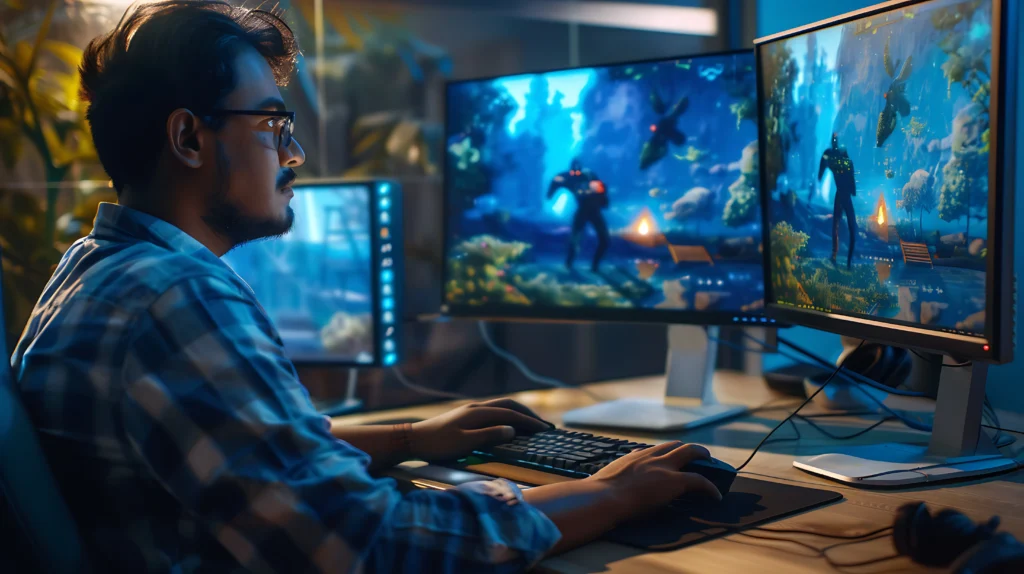
These programs teach students both technical skills and creative thinking, preparing them for careers as game designers, developers, producers, and specialists in interactive media. An online master’s degree lets you study at your own pace and gives you access to the best universities that will offer online game development degrees in 2025. It is true whether you just graduated from computer science, are already working, or are a creative designer looking to improve your skills.
Highly Ranked Online Master’s in Game Development Programs
Students exploring online Master’s in Game Development programs in 2025 have several excellent options at universities that combine technical expertise with creative innovation. Below are some of the top-ranked programs, each offering unique strengths for aspiring developers, designers, and professionals in the interactive media field. For full details, see our Best Online Master’s in Game Development Programs section.
West Virginia University offers a forward-looking online MS program in Game Design & Interactive Media that balances creativity with practical technology skills. The program emphasizes interactive storytelling, serious games, and gamification applications that extend beyond entertainment, including healthcare, education, and training. WVU’s strong focus on applied research and affordable tuition makes it an attractive option for students seeking both innovation and value in their graduate education.
Full Sail University
Full Sail University is well known for its immersive approach to digital media education. Its online MS in Game Design blends creativity and management, focusing on production leadership, prototyping, and user experience design. This program is particularly well-suited for those who want to transition into game producer or creative director roles, as it emphasizes leadership alongside development skills.
Savannah College of Art and Design
SCAD’s MFA in Interactive Design & Game Development is among the most prestigious creative programs available online. Known for its strong emphasis on art and user experience, the program provides advanced training in 3D modeling, animation, and immersive environment design. Students benefit from SCAD’s global creative community, access to industry-standard tools, and faculty with deep professional experience, making it a top choice for aspiring game artists and designers.
The Academy of Art University in San Francisco offers an online MFA in Game Development, allowing students to specialize in areas such as concept art, 3D modeling, animation, or game programming. With a strong portfolio-based approach, the program emphasizes building professional-quality projects that prepare graduates for immediate entry into the gaming and entertainment industries. Its flexible online delivery makes it especially appealing for working professionals seeking advanced creative training.
Rochester Institute of Technology
RIT offers one of the most comprehensive online MS programs in Game Design & Development, focusing heavily on technical depth in areas such as game engines, graphics programming, and gameplay systems. RIT’s strong emphasis on experiential learning ensures students graduate with polished portfolios that showcase both technical and creative skills. Its extensive alumni network in the tech and gaming industries provides excellent professional connections.
Online Master’s in Game Development Programs: Program Aspects & Considerations
Best Online Master’s in Game Development Programs
Choosing the right online master’s in game development can shape your career trajectory, whether you aim to design immersive worlds, master game engines, or lead production teams. Below is a ranked selection of standout programs, each offering a unique blend of technical expertise and creative innovation.
Rochester Institute of Technology (RIT) – Rochester, New York
Tuition: $25,000 per year
Highlights: The Rochester Institute of Technology’s online MS in Game Design & Development emphasizes technical mastery in areas such as gameplay systems, graphics, and engines. The program also features strong experiential learning, ensuring graduates leave with polished portfolios and direct industry connections.
Savannah College of Art and Design (SCAD) – Savannah, Georgia
Tuition: $40,000 per year
Highlights: Savannah College of Art and Design’s Online MFA in Interactive Design & Game Development focuses on advanced creative training, including 3D modeling, animation, and UX design. Students benefit from global networking opportunities and award-winning faculty.
Full Sail University – Winter Park, Florida
Tuition: $36,000 total program cost
Highlights: Full Sail’s Online MS in Game Design offers project-based, accelerated learning that mirrors real-world studio environments. Graduates gain leadership skills for roles such as game producer or creative director.
Academy of Art University – San Francisco, California
Tuition: $1,200 per credit
Highlights: The Academy of Art University’s Online MFA in Game Development allows students to specialize in areas such as animation, concept art, or programming. The portfolio-centered curriculum prepares graduates for immediate entry into the creative industries.
West Virginia University (WVU) – Morgantown, West Virginia
Tuition: $24,000 per year
Highlights: West Virginia University’s Online MS in Game Design & Interactive Media blends storytelling, serious games, and gamification. Its applied focus and affordability make it a strong choice for students seeking innovative yet accessible graduate training.
Source: Data Collected from Integrated Post Secondary Education Data System & University Data
***NA – Data Not Available
Our Ranking Methodology
When ranking the best online master’s in Game Development programs, we considered multiple factors that matter most to candidates and employers. Accreditation ensures that each program meets rigorous academic and industry standards, providing graduates with credentials that are widely respected. Affordability was evaluated by examining tuition rates, financial aid availability, and the overall return on investment. We also prioritized student outcomes, including job placement rates, alum success, and the quality of their portfolios. Faculty expertise plays a significant role—programs led by professors with real-world experience in gaming and interactive media provide invaluable mentorship. Finally, flexibility was assessed based on program delivery, part-time options, and support for working professionals. Together, these criteria highlight programs that deliver strong academic quality, career preparation, and accessibility.
Why Earn an Online Master’s in Game Development?
Earning an online master’s in game development can open doors to exciting career opportunities in one of the world’s fastest-growing industries. The global gaming market surpassed $200 billion in 2023, with steady growth projected as new technologies, including AR/VR, cloud gaming, and AI, reshape the field. Employers are increasingly seeking graduates who not only understand programming and design but also possess advanced leadership, project management, and problem-solving skills. A master’s degree signals this expertise, making candidates more competitive for senior roles in game studios, tech firms, and beyond.
The online format provides flexibility and accessibility without compromising quality. Students can complete coursework from anywhere in the world, often at their own pace, while balancing full-time work or family responsibilities. Many top-ranked universities now offer online master’s programs that closely mirror their on-campus counterparts, providing students with access to expert faculty, cutting-edge resources, and industry networking opportunities. It allows working professionals to upskill without having to relocate or pause their careers.
Career outcomes for graduates are strong. According to the U.S. Bureau of Labor Statistics, employment for software developers—including game developers—is projected to grow 15% between 2022 and 2032, far outpacing the national average. With demand high across entertainment, healthcare, education technology, and AR/VR applications, the degree offers not just job security but also pathways into leadership and specialized positions. Combined with competitive salaries that often exceed $100,000 for advanced roles, an online master’s in game development represents both a practical and strategic investment in long-term career success.
Key Benefits of Online Learning
An online master’s in game development provides unmatched flexibility, allowing students to study from anywhere while balancing work and personal commitments. Many programs are structured for working professionals, offering asynchronous classes or part-time enrollment. Online learning can also be more affordable than traditional options, with savings on housing, commuting, and campus fees. Importantly, top universities now offer their game development programs online, providing students with access to the same expert faculty, cutting-edge resources, and career services as their on-campus peers—without the need to relocate. This balance of flexibility, affordability, and quality makes online study a practical choice.
High Demand for Game Developers
The demand for skilled game developers continues to rise, driven by both the growth of the entertainment industry and the increasing adoption of game technologies in other sectors. Modern game engines, such as Unity and Unreal, are no longer confined to gaming—they power immersive training simulations, virtual reality experiences, medical modeling, and architectural visualization. As a result, the skill set of a game developer—combining programming, design, and interactive storytelling—has become valuable across multiple industries. According to the U.S. Bureau of Labor Statistics, employment for software developers is projected to grow 25% between 2022 and 2032, driven in part by innovation in AR, VR, and AI-powered experiences. Industry reports also point to consistent year-over-year growth in global gaming revenue, signaling strong long-term demand. For professionals with advanced expertise, this creates diverse and sustainable career opportunities that extend well beyond traditional game studios.
Industries and Sectors Hiring Graduates in Game Development
Graduates with a master’s in game development can pursue careers far beyond traditional gaming. Key industries include
Career Advancement and Salary Potential
An online master’s in game development can accelerate career growth by equipping professionals with advanced technical skills, creative expertise, and leadership capabilities. Graduates are often positioned for promotions into roles such as lead designer, technical director, or project manager, where they oversee teams and drive production pipelines. Advanced training also opens up opportunities in specialized fields such as AR/VR development, simulation design, or interactive media leadership. According to industry reports, game developers with a master’s degree and relevant experience can earn salaries exceeding $108,471 annually, with senior and management roles offering significantly higher compensation and greater responsibility.
Game Development Curriculum and Learning Outcomes
Online master’s programs in game development are designed to provide students with both technical expertise and creative skills, preparing them for careers across the gaming and interactive media industries. Core courses typically include Game Design Principles, 3D Modeling and Animation, Game Programming, Artificial Intelligence for Games, and User Experience (UX) Design. Many programs also offer electives or specializations in AR/VR Development, Simulation and Serious Games, or Narrative Design, allowing students to focus on their desired career path.
Hands-on learning is a central component of these programs. Students complete projects such as building playable games, designing immersive worlds, and collaborating in interdisciplinary teams. Portfolio development is often integrated into the curriculum, ensuring graduates leave with professional-quality projects that demonstrate both creativity and technical ability.
Practical Skills Students Gain
By completing these programs, graduates emerge ready for roles in game design, programming, AR/VR, simulation, and interactive media. The combination of hands-on experience, technical knowledge, and creative expertise ensures they are well-prepared to meet the demands of a rapidly evolving industry.
Core Courses You’ll Take
Online master’s programs in game development combine technical training with creative design to prepare students for careers across the gaming and interactive media industries. The curriculum emphasizes hands-on learning, giving students opportunities to build playable games, design immersive environments, and develop professional portfolios. Core courses focus on essential skills, including programming, 3D modeling, AI implementation, and user experience design. Meanwhile, electives and specializations enable students to tailor their education to areas such as AR/VR, simulation, or narrative design. The following sample courses illustrate the types of classes students can expect to take.
Electives and Concentration Areas
Beyond core courses, online master’s programs in game development often allow students to choose electives or concentration areas to tailor their education to specific interests. These options enable learners to deepen their expertise in specialized fields such as immersive technologies, narrative design, simulation, or project management. By selecting courses aligned with career goals, students can develop targeted skills that make them competitive for roles in gaming, AR/VR, interactive media, and other emerging sectors. The following are common electives and concentrations offered.
Capstone, Research, and Hands-On Projects
Online master’s programs in game development emphasize practical application through capstone projects, research assignments, and hands-on learning. Students integrate technical, creative, and design skills to develop fully functional games, simulations, or interactive experiences. These projects often involve team collaboration, mirroring professional studio workflows, and culminate in a polished portfolio that demonstrates mastery of programming, 3D modeling, AI implementation, and user experience design. Capstone experiences prepare graduates to solve real-world challenges and showcase their abilities to potential employers across gaming, AR/VR, simulation, and interactive media industries.
Skills You’ll Graduate With
Graduates of online master’s programs in game development leave with a combination of technical expertise and professional competencies that prepare them for success in a competitive industry. The curriculum emphasizes both hands-on projects and collaborative learning, ensuring students can apply their knowledge to real-world challenges. Below are some of the key skills they typically develop by the time they complete the program.
Specializations in Game Development
Specializations allow students to tailor their master’s education to their career goals and develop expertise in high-demand areas. By focusing on a specific track, learners gain in-depth skills that make them more competitive in niche sectors of the gaming and interactive media industries. Specializations also help students align coursework with personal interests, whether that’s technical programming, immersive design, or project leadership.
Popular Specializations Include
These specializations provide students with targeted expertise, preparing them for specialized roles across gaming, tech, and interactive media sectors.
Admission Requirements for Online Master’s in Game Development
Applying to an online master’s in game development requires a combination of academic credentials, professional experience, and evidence of creative or technical ability. While exact requirements vary by program, most universities look for candidates who demonstrate readiness for advanced study and hands-on project work in game development. Below are the standard admission criteria:
General Prerequisites
Most online master’s programs in game development require applicants to hold a bachelor’s degree in a related field, such as computer science, digital arts, game design, or software engineering. A minimum GPA of 3.0, typically on a 4.0 scale, is commonly expected. Some programs may consider candidates with lower GPAs if they demonstrate strong professional experience or a compelling portfolio. These prerequisites ensure students are prepared for the technical and creative challenges of graduate-level coursework.
GRE/GMAT Policies and No-GRE Options
Many online master’s in game development programs now offer no GRE admission options, making it easier for professionals to apply without standardized test scores. While some universities still require GRE or GMAT results, an increasing number of top-ranked schools waive this requirement if applicants demonstrate strong academic records, relevant experience, or a compelling portfolio. Choosing programs with no GRE policies can simplify the application process and broaden access for qualified candidates.
Professional Experience Recommendations
While not always required, relevant industry experience can strengthen an application to an online master’s in game development. Experience in game design, programming, animation, or interactive media demonstrates practical skills and readiness for graduate-level coursework, making candidates more competitive and better prepared for hands-on projects and collaborative studio-style learning.
Program Cost and Affordability
The cost of an online master’s in game development can vary significantly depending on the university, program length, and pricing model. Understanding tuition structures, additional fees, and hidden costs is key to planning your education effectively.
Tuition and Fees Breakdown
Programs typically charge either a per-credit-hour rate, ranging from $500 to $1,500, or a flat-rate tuition for the entire degree, often between $25,000 and $60,000. Some schools include mandatory fees such as registration, lab access, or software licenses, while others list them separately. Knowing how tuition is structured helps students budget for the entire program.
Hidden Costs (Technology, Online Access, Materials)
Students may need high-performance computers, VR/AR devices, specialized software, or cloud-based development platforms. Additional costs can include digital textbooks, online learning tools, and optional certifications. Accounting for these expenses upfront ensures there are no surprises and helps maintain an accurate total program budget.
Comparing Costs Across Universities
When evaluating programs, consider both tuition models and additional fees. Flat-rate programs often simplify budgeting by bundling most costs, while per-credit programs may allow flexibility but add variable fees. Comparing universities side by side helps students find programs that provide the best combination of value, resources, and quality education.
Financial Aid and Funding Options
Pursuing an online master’s in game development can be a significant investment, but multiple financial aid options make it more accessible. Students can combine scholarships, employer support, federal aid, and other funding opportunities to offset tuition costs. Understanding these resources early helps plan effectively and reduce reliance on out-of-pocket payments.
Scholarships and Fellowships
Many universities offer merit-based scholarships or fellowships specifically for graduate students in game development or related fields. These awards may consider academic performance, creative portfolios, or leadership potential. Some programs also partner with industry organizations to provide additional funding for students with demonstrated talent or professional promise.
Employer Tuition Assistance
Professionals currently working in gaming, tech, or media industries may qualify for employer-sponsored tuition reimbursement. Companies often support employees pursuing advanced degrees that enhance skills relevant to their role, helping students complete a master’s program with reduced personal cost.
Federal Aid, FAFSA, and Student Loans
Students can apply for federal financial aid by completing the FAFSA. Eligibility may include grants, low-interest student loans, or work-study opportunities. Federal programs often offer flexible repayment options, making graduate education more accessible and affordable. Some universities also offer assistantships or research opportunities that provide stipends or tuition waivers for qualified candidates.
Program Length and Flexibility
Online master’s in game development programs are designed to accommodate a variety of schedules and professional commitments. Full-time students typically complete the degree in 18–24 months, while part-time students may extend their studies to 3–4 years to balance work, family, and other responsibilities. Programs may follow a cohort-based model, where students progress through courses together, or a self-paced format, allowing learners to move at a pace that suits their availability.
Flexibility is a key advantage of online programs, enabling students to attend lectures, complete assignments, and participate in projects from anywhere. To maintain work-life balance, they are encouraged to set a structured schedule, prioritize hands-on projects, and communicate with instructors and peers. This approach ensures timely progress while fully benefiting from practical, immersive learning experiences.
Accelerated Master’s in Game Development Programs
These accelerated tracks are designed for highly motivated students who want to complete their degree in a shorter timeframe, often within 12–18 months. They follow an intensive schedule, taking heavier course loads each term or utilizing summer and intersession courses to progress more quickly. Accelerated programs emphasize hands-on projects, portfolio development, and collaborative work, ensuring that students gain the same depth of skills as a traditional program. While the pace is demanding, it enables graduates to enter the workforce sooner, advance their careers more quickly, and capitalize on high-demand opportunities in the game design, programming, and interactive media industries.
Careers with a Master’s in Game Development
Earning a master’s in game development prepares graduates for a range of creative and technical careers in a rapidly growing industry. Professionals can work on designing, programming, testing, and managing games, AR/VR experiences, and interactive media projects. According to the Bureau of Labor Statistics, software development roles have a median annual salary of $131,450. They are projected to experience 16% job growth from 2024 to 2034, which is significantly faster than the average yearly growth rate.
Top Job Roles for Artificial Intelligence Graduates
Graduates can pursue positions ranging from hands-on technical roles to leadership and product-focused roles. Key opportunities include AI engineers, machine learning engineers, data scientists, software developers, and robotics engineers. These positions involve designing AI models, developing predictive algorithms, creating intelligent software, and integrating AI solutions across business processes.
| Job Title | Average Salary (USD) | Job Growth (2024–34) | Key Responsibilities |
|---|---|---|---|
| Game Developer | $108,471 | 16% | Build and program games across platforms, implement mechanics and features. |
| Game Designer | $149,118 | 10% | Conceptualize game ideas, level design, and interactive storytelling. |
| QA Tester / Game Tester | $38,039 | 10% | Identify bugs, test performance, and ensure a smooth player experience |
| Game Producer | $123,552 | 5% | Manage teams, budgets, and development schedules for game projects. |
| Technical Artist | $138,713 | 8% | Optimize art assets, integrate graphics with game engines, and support programmers. |
Top Job Roles for Game Development Graduates
Graduates can pursue roles that blend creativity and technical expertise. Popular positions include Game Developer, Game Designer, QA Tester, Technical Artist, and Game Producer, each offering opportunities to contribute to engaging, high-quality interactive experiences.
Long-Term Career Growth and Leadership Opportunities
Graduates of online master’s programs in game development can pursue a wide range of positions that combine technical skills, creativity, and strategic thinking. Game Developers focus on coding and implementing gameplay mechanics, while Game Designers craft levels, narratives, and user experiences. QA Testers ensure games run smoothly, identifying bugs and optimizing performance. Technical Artists bridge the gap between design and programming, optimizing visual assets, and Game Producers oversee projects, managing teams, schedules, and budgets.
Beyond these core roles, graduates may advance to become Lead Developers, Technical Directors, Art Directors, Studio Managers, or Creative Directors, assuming greater responsibility for project vision, team leadership, and strategic planning. Other specialized positions include VR/AR Developers, Simulation Designers, Gameplay Engineers, and Narrative Designers, offering opportunities to apply expertise in interactive media, training simulations, and emerging immersive technologies. These advanced roles leverage the skills gained in graduate programs, enabling long-term career growth, higher salaries, and leadership opportunities in the dynamic gaming industry.
Accreditation and Why It Matters
Accreditation ensures that a university or program meets established quality standards in its educational offerings. Regional accreditation applies to the institution as a whole and is widely recognized by employers, professional organizations, and other universities. Programmatic or specialized accreditation focuses on specific programs, verifying that the curriculum meets industry standards and prepares students for professional careers.
For game development programs, relevant programmatic accreditations may include:
Attending a program with recognized accreditation is essential for accessing federal financial aid, transferring credits, and ensuring that employers and professional organizations recognize the value of your degree. Always verify that both the institution and program hold the appropriate accreditation before enrolling.
How to Choose the Right Online Master’s in Game Development Program
Choosing the right online master’s program in game development requires careful evaluation of multiple factors to ensure the degree aligns with your career goals, budget, and learning preferences. A strong program should offer a balance of technical training, creative development, and hands-on experience, preparing graduates for a competitive and evolving industry.
Checklist for Choosing the Right Program
By reviewing these criteria, prospective students can select a program that offers quality education, practical skills, and long-term career value.
Accreditation and Reputation
Look for programs that a regional accrediting agency to ensure quality, eligibility for federal financial aid, and recognition from employers. Additionally, consider programmatic accreditation in software engineering, digital arts, or interactive media to confirm the curriculum meets industry standards and prepares graduates for professional success.
Faculty and Research Opportunities
Evaluate faculty experience and industry involvement. Programs led by professors who have worked in AAA studios or game design companies offer real-world insights. Check for research labs, collaborative projects, or hands-on development opportunities that enhance practical skills and portfolio development.
Cost vs. Return on Investment
Compare tuition, fees, and extra expenses against expected career outcomes. Programs that offer scholarships, assistantships, or employer tuition reimbursement can improve ROI. Consider long-term earning potential and advancement opportunities when evaluating the affordability of a job.
Student Support and Career Services
Strong programs provide mentorship, career counseling, internship placement, and networking opportunities. Access to alumni networks, online workshops, and professional development resources helps graduates transition smoothly into the gaming and interactive media industries.
Frequently Asked Questions About Online Game Development Master’s Degrees
How long does it take to earn an online Master’s in Game Development?
Most online programs require 18 to 24 months to complete for full-time students. Part-time schedules may extend to 3–4 years, while accelerated programs can be completed in 12–18 months. Completion time varies depending on the course load, program structure, and whether the program is self-paced or cohort-based.
Can I work while completing this degree?
Yes. Online master’s programs are designed for flexibility, allowing students to balance work, family, and study. Part-time enrollment or self-paced courses will enable you to continue your professional work while pursuing advanced skills in game development. Effective time management and structured planning are key.
Is online Game Development respected by employers?
Absolutely. Employers value degrees from accredited institutions, especially those that emphasize hands-on projects, portfolios, and industry collaboration. Graduates with technical, design, and project management skills are competitive in gaming, AR/VR, interactive media, and simulation industries. Reputation and practical experience matter as much as online delivery.
What’s the difference between Game Development and [Related Field] degrees?
Game Development focuses on creating interactive software, combining programming, design, art, and storytelling. Related degrees, such as Computer Science, Interactive Media, or Animation, may emphasize broader areas of software engineering, digital arts, or multimedia production, but may not provide the specialized gaming curriculum and project-based experience that a dedicated game development program offers.
What jobs can I get after graduation?
Graduates can pursue roles such as Game Developer, Game Designer, QA Tester, Technical Artist, or Game Producer. Advanced opportunities include Lead Developer, Technical Director, Creative Director, or Studio Manager. Careers span industries like entertainment, AR/VR, healthcare simulations, education, and interactive media, offering strong growth and leadership potential.
Conclusion
Pursuing an online Master’s in Game Development equips students with a powerful blend of technical, creative, and leadership skills tailored for the dynamic gaming and interactive media industry. With flexible scheduling, hands-on projects, and access to top faculty, graduates can advance their careers while balancing personal and professional commitments. Accredited programs ensure a quality education, career recognition, and eligibility for financial aid. Whether you aspire to a career in game design, programming, AR/VR, or leadership roles, this degree provides the training, portfolio development, and industry connections necessary to thrive in a competitive and fast-growing field.




